When we pulled the last of the season’s leeks from one of our beds, we ended up with quite a few leeks. Several people asked me what what in the world I was going to do with all those leeks.

Well, the first thing I want to clarify if that, as a family, we eat a lot. So even though it looks like my daughter is carrying her own volume in leeks (and she well may be), we can eat this many leeks in a couple weeks.
Here’s one family-pleasing way to use leeks.
Japanese Style Leek and Beef Skewers
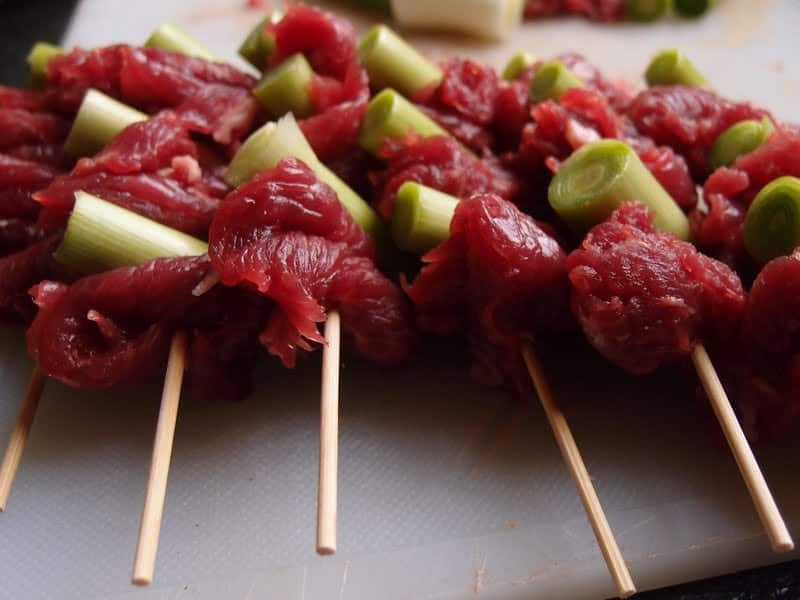
There is a Japanese snack food of marinated beef and super-sized Japanese green onions (called negi), threaded on a skewers and grilled. The skewers often have a sweet soy-based sauce on them, and go down easy with a big glass of Kirin. The thinnest leeks are about the same size as the negi used in Japan, so I made Leek and Beef Skewers with some of the lil’ guys I pulled from the garden.
You’ll need a good grilling steak. I used a grass-fed shoulder tender (teres major), but flank, flap, flat-iron or sirloin are all fine. You want a steak with good flavor. Because you are slicing the beef thinly and searing or grilling these skewers quickly, you don’t need the most tender, expensive cuts. Slice your beef into bite-size strips across the grain.

Pick out tender leeks about a half-inch in diameter. A little smaller or larger is fine, but this is not the recipe for the big leeks. Save those for savory tarts and soups and leeks braised with cream and goat cheese (other ways I’ll be using up the bounty). Cut the white and light green portion of the leeks into 1-inch sections.

Alternately thread the beef slices and leek sections onto bamboo skewers. 1 lb. of steak and 3 or 4 leeks will make about 6-8 skewers, give or take, and will serve 2-3 people depending on appetite and side dishes. Adjust based on how much beef and how many leeks you have.

- 1/2 cup soy sauce
- 1/2 cup mirin
- 1/4 cup olive oil
- 1 tablespoon fresh grated ginger (or a generous dash of the dried stuff)
- 2 tablespoons brown sugar or sugar in the raw
Taste it. It should taste strong but well balanced. If it needs a bit more sugar, add another tablespoon. Too sweet? Add a splash of soy sauce. Trust yourself. Dump the marinade over the skewers and let sit, refrigerated, for 2-24 hours. The longer you marinate, the stronger (better) the flavor.


This looks fantastic! Thanks for sharing!
That's alot of leeks!!