The fun stuff, honestly, is the gear. From emergency camp stoves to hand-crank radios, people who get into preparedness just love to talk about, compare, and assess their gear.
But I’m of the opinion that in an emergency, having a solid plan is where you gain real peace-of-mind and avoid needless panic. I also work from the perspective that the absolute most important thing in an emergency is getting my family together as quickly and efficiently as possible, so we can work as a team. Frankly, not being able to locate or meetup with one of my kids is far more terrifying to me than muddling through a disaster with a sub-par 72 Hour Bag.
So it might not be as sexy as choosing your water filtration, but today you are going to do something just as important. You’re gonna finalize your evacuation, meetup, and home emergency procedures.
You’re going to work with your family to make some important decisions about where you will go and who you will contact in an emergency, and in the process you are going to complete the Family Reference Binder we started in the last article. (If you haven’t read the Family Reference Binder article, please start there.)
As always, modify, adjust or change this framework for your needs.
What We Are Going To Do Today
Today we are completing the Emergency Procedures section of your Family Reference Binder. When we are done, you will have the following procedures and plans complete and in your binder. (To make it easier to navigate through this long post, the “table of contents” below are all links to the relevant section of this post.)
Basic Home Procedures
Evacuation and Meetup Plans
- Emergency Evacuation and Meetup Locations
- Regional Hotels
- School Evacuation and Meetup Plan
- Children’s Emergency ID Cards
- Workplace Evacuation and Meetup Plan
Emergency Procedures
- Basic Emergency Communication Procedures
- Region Specific Emergency Procedures
- Shelter-in-Place Procedure
- Procedure for Pets in an Emergency
- Special Needs Family Considerations In An Emergency
Checklists
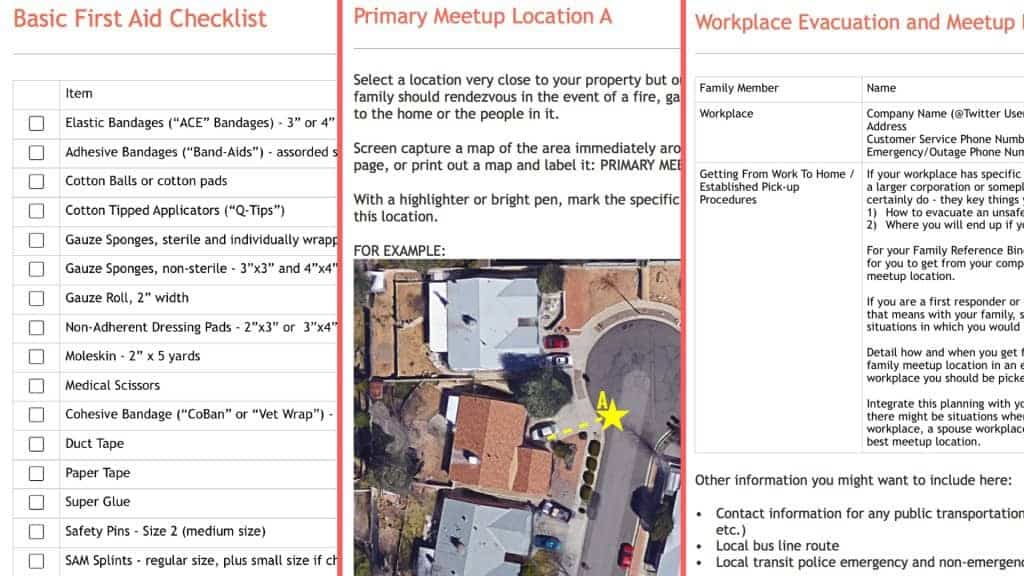
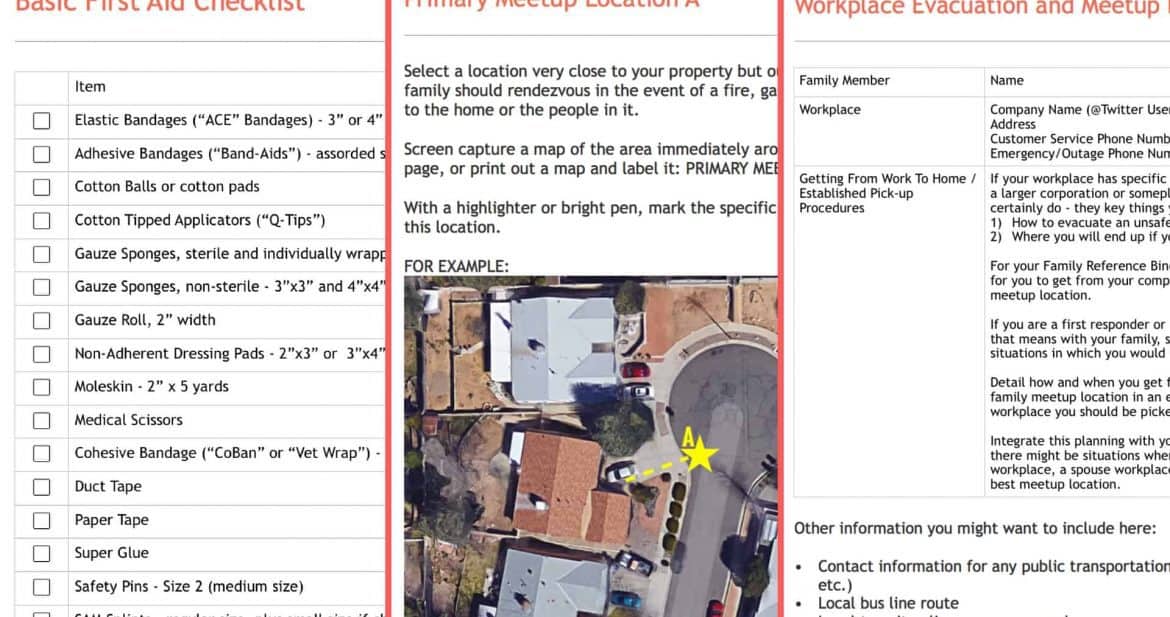
Are you a Patron of NWEdible? All Patrons in good standing have access to Part 2 of my Family Reference Binder framework. Download in Word or Pages, type in the information that is relevant to you and your family, and print out for an easy way to complete this challenge.
Patrons, just go to this Patron post to access the download. Not a Patron but interested in joining? Patrons get huge amounts of exclusive bonus content while while directly supporting stuff like this Preparedness 101 Series.
Basic Home Emergency Procedures
Anything from an earthquake to a windstorm to a simple burst pipe can cause minor household emergencies. On this page, detail any basic emergency procedures for your home.
In a document (recommended) or on a sheet of paper, type or write out the following:
Resetting Circuit Breakers and Shutting off Electricity
- Location of electrical panel
- Procedure to reset circuit breakers and procedure to turn off main breaker.
Gas Shutoff
- What to do in the event of a suspected gas leak (start with, “get everyone out of the house and call the gas company or 911.” Include appropriate numbers).
- Location of gas main and gas shut off tool (we just ziptie our non-sparking gas shutoff tool to the gas main itself.)
- Procedure to shut off gas main. (More information on gas shutoff here.)
Water Shutoff
- Location of water shutoff valve
- Procedure to shut off all water to the house. (More information on locating your water shutoff here.)
Fire
- What to do in the event of a fire (for anything other than a very small contained fire, this should start with, “get everyone out of the house and call the fire department at 911.”)
- Procedure in the event of a minor, contained fire.
- Location of household fire extinguishers and instructions on how to use fire extinguishers.
Power Outages
- Location of flashlights, headlamps, extra batteries, backup phone battery, emergency radio and other emergency supplies.
- Procedure to turn off sensitive electronics, conserve phone battery, etc.
- Procedure to manage refrigerator and freezer and time frame in which food is safe. (Example from my Binder: “Keep refrigerator and freezer doors closed. If the power comes back on within 4 hours, food in the fridge is still safe to eat. A full freezer will hold temperature for about 48 hours. A partially-full freezer will hold temperature for 24 hours. After this time, food should be fully cooked and eaten, canned or otherwise preserved, or thrown out.”)
Add any other basic home emergency procedures you want to include, such as installing hurricane protection like window coverings, or safely switching to backup generator power.
Basic First Aid Procedures
In a document (recommended), or on a sheet of paper, write or type out the following:
- Emergency number – probably 911
- First Aid Kit– detailed location of basic first aid and supplemental medical supplies.
- Any other information someone might need to know to perform first aid procedures in your home. For example, severe allergies, location of epi-pens, chronic medical conditions of family members, etc.
After that, add these Visual Guidelines For First Aid:
- Adult First Aid/CPR/AED Procedures – Print out this PDF from the Red Cross, hole punch it, and add it to your binder immediately following the Basic First Aid Procedures Page
- Pediatric First Aid/CPR/AED Procedures – Print out this PDF from the Red Cross, hole punch it, and add it to your binder immediately following the Red Cross Adult First Aid/CPR/AED Printout.
- Any other specialty First Aid Instructions you want? Download from a reputable source and add these to your binder.
Emergency Evacuation and Meetup Locations
This is where you decide where to go in an emergency if you can’t stay home, and where your family should rendezvous if you are separated. I’m going to go into detail here, but don’t let that intimidate you. All we’re really doing here is picking a couple places where you could go in an emergency, each a step further away from your home than the last.
Get on Google and pull up a map of your area. Find your house, condo or apartment building. With your family, and with consideration for workplace locations, school locations, likely emergency scenarios, etc., decide on the following four emergency evacuation and meetup locations.
- A primary meetup location very close to your home.
- A local meetup location near you, but at least a few blocks away from your block.
- A regional meetup location within a few hours drive of your home.
- A further afield meetup location, at least several hours away.
Location A: Primary Meetup
Imagine that you needed to leave your home for some reason – let’s say a fire – but otherwise everything is ok. Your neighborhood is fine, there is no widespread disaster. Where do you and all the members of your household convene?
Select a location very close to your property but outside of your home, where your family should rendezvous. This should be a spot just a little ways from your home that would be safe, even if your home wasn’t – maybe on the sidewalk across the street, maybe at the end of your long driveway by the mailbox, maybe at the entrance to the neighborhood coffeeshop two doors down from your building.
In a document (recommended) or on a sheet of paper, type or write out the following:
- Specific Location Description – I.e., “At the end of our driveway, next to the mailbox, away from the big oak tree.”
- Address
- Phone number
- Any additional location information or complete directions
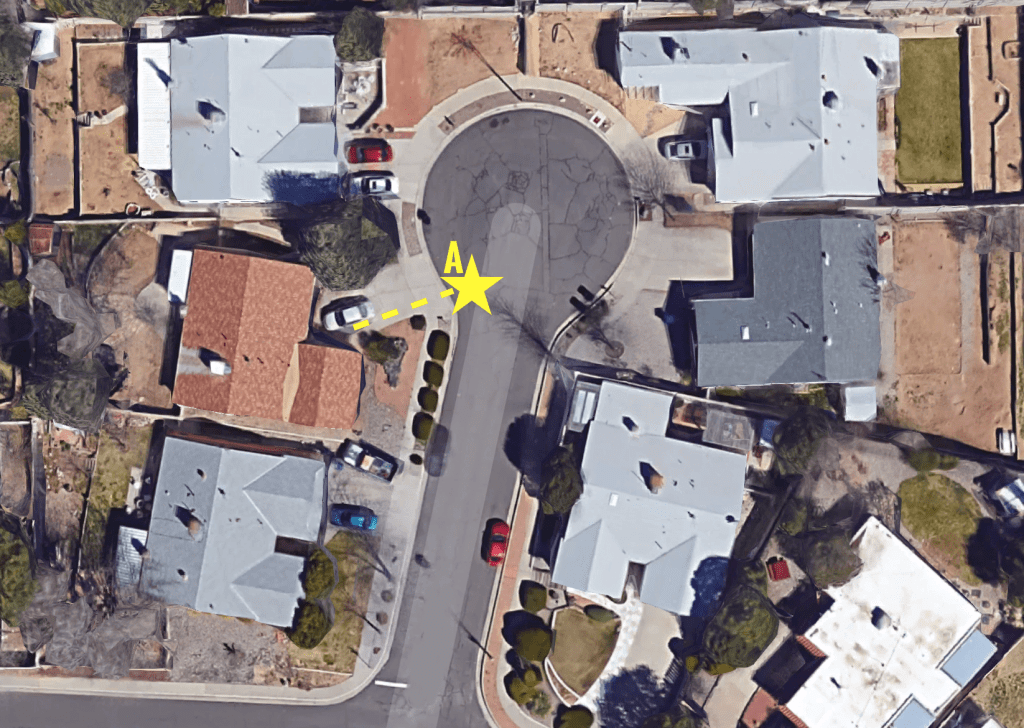
Print out a map of this area and label it: Primary Meetup Location A. With a highlighter or bright pen, mark the specific meetup location. Mark a path to this location.
Here’s an example of what your map might look like:
Location B: Local Meetup
Select a location close to your home but outside of your immediate neighborhood, where your family should rendezvous in the event of an emergency that makes the area immediately around your home unsafe. If possible, this location should be an easy walk for all members of the family.
This location also serves as a local staging place where the family can assemble before moving to a more regional evacuation location.
In a document (recommended) or on a sheet of paper, type or write out the following:
- Specific Location Description – I.e., “Mytown Library parking lot, next to the book return dropoff bin.”
- Address
- Phone number
- Any additional location information or complete directions
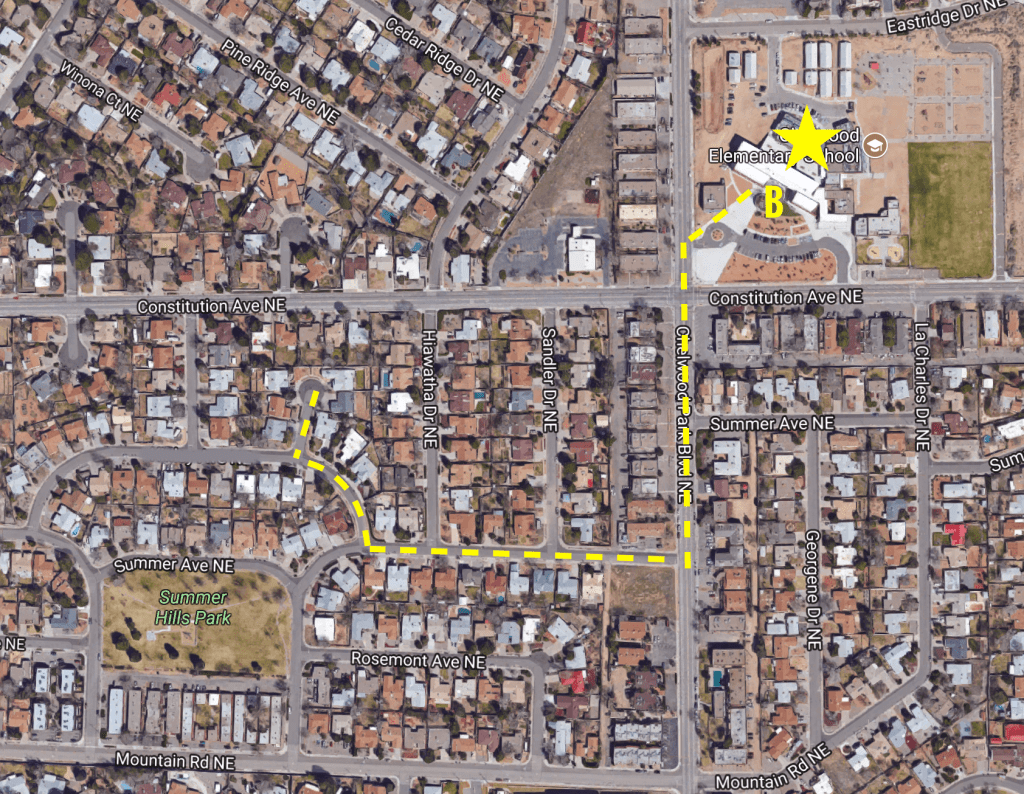
Print out a map of this area and label it: Local Meetup Location B. With a highlighter or bright pen, mark the specific meetup location. Mark a path to this location.
Here’s an example:
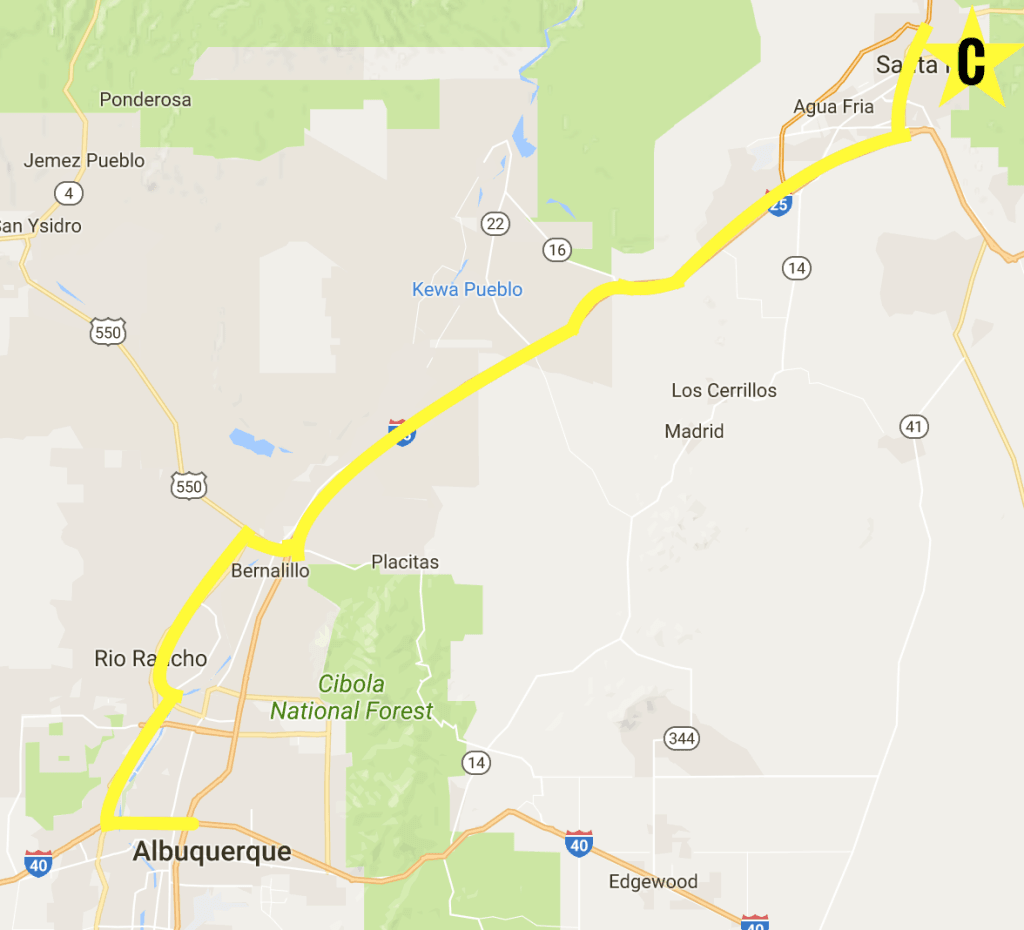
Location C: Regional Meetup
Select a location within your region (within a few hour’s drive), but not in your immediate area, where your family could go in the event of an emergency that makes your town, city, or area unsafe. Good choices include a friend or relative’s home.
In a document (recommended) or on a sheet of paper, type or write out the following:
- Specific Location Description – I.e., “Grandma’s house in Next-town.”
- Address
- Phone number
- Any additional location information or complete directions
Print out a map of this area and label it: Regional Meetup Location C. With a highlighter or bright pen, mark the specific meetup location. Mark a path to this location.
Here’s an example:
Location D: Further Afield Meetup
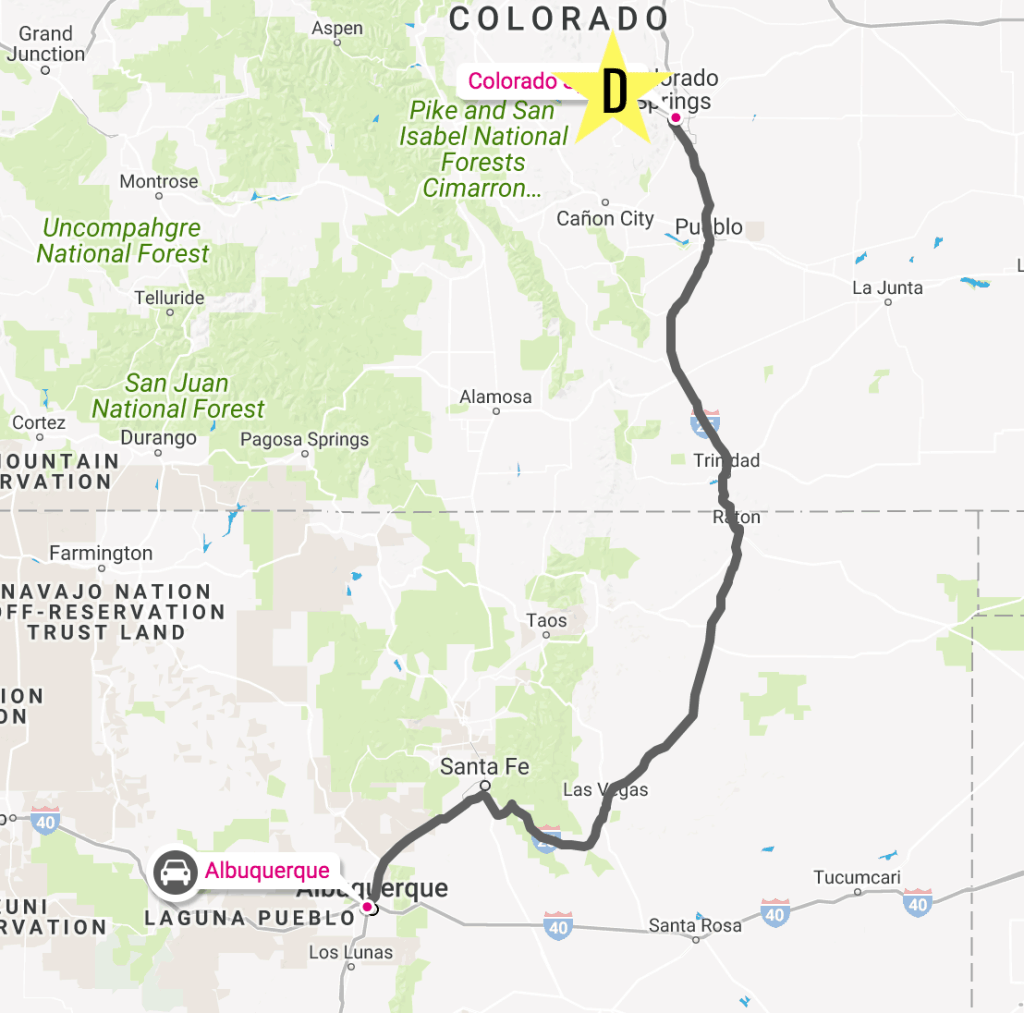
Select a location far from your home, at least several hour’s drive away, that would be highly unlikely to be affected by an emergency situation at the same time your location is affected. This should be an area where your family can shelter if needed until your home region is safe. Good choices include a friend or relative’s home.
In a document (recommended) or on a sheet of paper, type or write out the following:
- Specific Location Description – I.e., “Aunt Sarah’s house in Farthertown, Nextstate.”
- Address
- Phone number
- Any additional location information or complete directions
Print out a map of this area and label it: Further Afield Meetup Location D. With a highlighter or bright pen, mark the specific meetup location. Mark a path to this location.
Here’s an example:
Regional Hotels
In a document (recommended) or on a sheet of paper, type or write out the following:
Two “local hotels” (coordinate with the region around your “Location B”). For each hotel, list
- Hotel Name
- Address
- Direct Phone Number and 1-800 Number
- If the hotel is pet-friendly, and other details that might be important to your family
- Full directions to the hotel and a map to this hotel (print and add after this page)
Two “regional hotels” (coordinate with the region around your “Location C”). For each hotel, list
- Hotel Name
- Address
- Direct Phone Number and 1-800 Number
- If the hotel is pet-friendly, and other details that might be important to your family
- Full directions to the hotel and a map to this hotel (print and add after this page)
Two “further afield hotels” (coordinate with the region around your “Location D”). For each hotel, list
- Hotel Name
- Address
- Direct Phone Number and 1-800 Number
- If the hotel is pet-friendly, and other details that might be important to your family
- Full directions to the hotel and a map to this hotel (print and add after this page)
School Evacuation and Meetup Plan
Because this is so personal and variable, it’s impossible to say “fill out this list and be done.” Instead, I’ll offer some general thoughts on how to think about reuniting with a child at school in the event of an emergency.
First, your child’s school (or daycare, or preschool, or university…adapt for your situation) almost certainly has specific emergency procedures in place. Public schools perform various emergency drills very reliably. As a parent, you’ll want to understand:
- How the school will alert you if there is an emergency
- How the school will evacuate the students in an emergency
- If and under what circumstances your child would be allowed to leave campus (for example, to walk home)
- What campus lockdown procedures are and how they impact your ability to gain access to the school in an emergency
- Where you will be able to meet your child in an evacuation emergency
Discuss meetup procedures with all school-age children, even young ones. Use calming and reassuring language. You may want to reminded your kids to follow the directions of the school teachers and administrators.
Detail if and when your child should leave campus, where you expect him or her to wait for you, etc.
Integrate this planning with your family meetup location planning – there might be situations where a non-home location between your workplace, a spouse workplace, children’s schools, and home is the best meetup location.
I recommend detailing the answers to these questions in this section, along with other school procedures that might impact your ability to meetup with your child in an emergency.
In a document (recommended) or on a sheet of paper, type or write out the following:
- Family member (student) name
- School information – School Name (@Twitter Username), room number or emergency meetup location or typical location within school, School Address, School Phone Number, School Emergency or Outage Phone Number
- Contacts Authorized To Sign Your Child Out of School – Your child’s school probably made you fill out an emergency contact form in which you listed the names and numbers of several people who you specifically authorize to take your child off campus in the event of an emergency. Duplicate that information here.
- Getting From School To Home or Established Pick-up Procedures
- Any other information that might be important about locating or meeting up with kids in school
Children’s Emergency ID Cards
Keep one copy of your child’s Emergency ID cards in your Family Reference Binder. Keep another copy in your child’s backpack, the diaper bag, their wallet (for older children) or other location most likely to be near your child in an emergency.
Be very thoughtful about what information you include on an Emergency ID Card “managed” by a child. If this card were to get lost in the lunchroom or on the recess field, would any of this information raise security concerns?
I include the following information on my own children’s emergency ID cards, but you should adjust what you include based on your own family need and any information security concerns you have.
- Name and nickname
- Mother’s full name
- Father’s full name
- Address
- Contact phone numbers for mother and father
- Out of Town emergency contact name and phone number
- Date of birth
- Current age
- Height
- Weight
- Eye color
- Hair color
- Identifying marks
- Blood type
- Allergies
- Social security number – only on at-home cards
- Passport number – only on at-home cards
- A recent photo
There are several good, existing templates to make a child’s emergency ID card.
- This template from Save The Children is pretty basic.
- This template is far more comprehensive.
- This web-based form will prompt you for information and use that to create an ID card for your child.
Workplace Evacuation and Meetup Plan
This is the adult equivalent of the School Meetup Plan. Again, because this is so personal and variable, it’s important to think through your specific situation, workplace location, commute risks, etc. when developing a plan.
If your workplace has specific emergency procedures – and if it is a larger corporation or someplace with multiple locations it almost certainly does – they key things you need to know are:
- How to evacuate an unsafe situation if you’re at work
- Where you will end up if you evacuate
- What resources does the company have if you need to shelter in place?
Think through what it would take for you to get from your company evacuation point to your family meetup location.
Think about the priorities for each adult in the household. For example, in my family, if my husband were to be at his workplace during an emergency, unless other information is communicated, his number one priority is to get to our home as soon as it is safe to do so. Wherever I am, my number one priority is to get myself (and the kids who are probably with me) home as soon as it’s safe to do so. That’s our family starting place: always, no question, no deviation unless it is physically unsafe for us to return there.
Think through how and when you get from your workplace to your home or a family meetup location in an emergency. Detail where near your workplace you should be met in the event of an emergency. Just think through what that looks like for your specific situation.
If you are a first responder or medical professional, talk through what that means with your family, so they understand the emergency situations in which you would be kept away from home, assisting in a disaster.
Integrate this planning process with your family meetup location planning because there might be situations where a non-home location between your workplace, a spouse workplace, children’s schools, and home is the best meetup location.
I recommend detailing the answers to these questions in this section, along with other work considerations that might impact how you plan to meetup with other family members in an emergency.
In a document (recommended) or on a sheet of paper, type or write out the following:
- Family member name
- Workplace information – Company Name (@Twitter Username), Address, Location of Family Member within workplace (room, floor, department, etc.), Direct Line Phone Number, Customer Service Phone Number, Emergency/Outage Phone Number
- Getting From Work To Home or Established Meetup Procedures
- Any other information that might be important about meeting up from your workplace location
Other information you might want to include here:
- Contact information for any public transportation you might use (bus, train, ferry, etc.)
- Local bus line route
- Local transit police emergency and non-emergency numbers
- Regional maps that might be useful should you need to enact your workplace evacuation and meetup plan.
Basic Emergency Communication Procedures
In a document (recommended) or on a sheet of paper, type or write out the following:
Primary Family Coordinator
- Name
- Primary Phone Number (cell) and Secondary Phone Number
- Active social media profiles (@Twitter Username, Facebook ID, etc.)
- Email address
Backup Family Coordinator
- Name
- Primary Phone Number (cell) and Secondary Phone Number
- Active social media profiles (@Twitter Username, Facebook ID, etc.)
- Email address
Primary Out-of-Town Contact
- Name
- Primary Phone Number (cell) and Secondary Phone Number
- Active social media profiles (@Twitter Username, Facebook ID, etc.)
- Email address
Backup Out-of-Town Contact
- Name
- Primary Phone Number (cell) and Secondary Phone Number
- Active social media profiles (@Twitter Username, Facebook ID, etc.)
- Email address
Write down your procedure for communications in the event of an emergency. Feel free to use our “hub-and-spoke” method described below unless you have a better way for your family.
A Hub-And-Spoke Approach To Emergency Communications
All communication in an emergency should be done by text if possible. Text messages are more likely to go through when phone networks are overwhelmed.
Here’s a brief rundown on how we do family emergency communication. This method works well, and unless you have another system (like a family phone tree) that works better for your situation, this is a good option to adopt.
In an emergency, all updates and messages should be relayed in a hub-and-spoke manner to ensure important information is not missed in “cross-talk.” For efficiency in emergency communication, select a Primary Family Coordinator who will be the “hub” that messages go through. All incoming and outgoing family communication should be routed through your Primary Family Coordinator in an emergency.
Let’s say the Primary Family Coordinator is Mom. Mom is at work, Dad is at work, Kid #1 is in high school, Kid #2 is in middle school. In an emergency, Dad, Kid #1 and Kid #2 should all text in to Mom, and Mom should text out to everyone else. This ensures Mom doesn’t tell Kid #1 to go to Meetup Place A while Dad tells Kid #2 to go to Meetup Place B.
A Primary Family Coordinator makes sure everyone is getting the same information, and acts as a single point to keep track of who has responded to that information.
In the event the Primary Family Coordinator is unable to reliably access communication networks, designate a Secondary Family Coordinator (let’s say that’s Dad in our example.) Dad will act as the Family Coordinator, and will receive and pass on all incoming and outgoing emergency updates as long as Mom can’t be reached
In the event of a regional emergency, you’ll want an Out of Town Contact. Messages that can’t be delivered locally will sometimes get through to a far afield contact. Your Out-of-Town Contact might then be able to receive updates and relay information back to your family. If regional communications are down, your Out-of-Town Contact can act as a backup Family Coordinator.
A back-up Out-of-Town Contact is nice, just in case your primary Out-of-Town Contact isn’t available.
Region Specific Emergency Procedures
You’ve done some thinking about what your most likely regional emergencies will be. What procedures would help you get through that kind of disaster? You can’t plan for everything, and – as Mike Tyson said – “Everybody has a plan until they get punched in the mouth.”
But there are some emergencies like hurricanes that do have a substantial lead time. Windstorms and snowstorms are typically predicted. If heavy rain is forecast, what should you do to make your home more resilient? If you live in Tornado Alley, what would a new person need to know about getting to cover?
Think through your likely emergency scenarios and work up some flexible procedures to help you better weather them and better respond to them. If you aren’t sure where to start, go here and select the situation you’re concerned about. You’ll get a basic overview of best practices for the specific emergency you’re building a procedure for here.
In a document (recommended) or on a sheet of paper, type or write out the following:
- Emergency Supplies – Describe location of emergency supplies in detail. I.e., “In the blue Rubbermaid tub on the floor of the hall closet.” At a minimum, this should include the location of your 72 Hour Bags.
- First Aid Supplies – Describe location of first aid and supplemental medical supplies in detail. I.e., “in the red First Aid Kit in the top drawer of the hallway cabinet.”
- Other Supplies – Describe the location of other supplies that might be needed in a region-specific scenario. For example, heavy plastic sheeting, plywood, sandbags, etc…think about whatever region-specific events such as tornadoes, hurricanes, earthquakes, etc. might require an emergency response in your home.
In The Event of a [Insert Emergency Here]:
- NOTE: Insert as many notes to yourself as necessary here, so in an emergency situation you don’t have to worry about what to do – and instead you can focus on doing it. If you prefer, structure this as a checklist instead (see below for more information on checklists)
- Step 2
- Step 3
- Step 4
- Step 5, etc.
- Final step: After [the specific emergency] has passed, evaluate and restock your emergency supplies as needed.
If you love preparedness, consider putting together Emergency Procedures sheets for the more likely emergencies for your area.
Shelter-in-Place Procedure
Think through your likely emergency scenarios and work up some flexible procedures to help you better weather them, or better respond to them. If you aren’t sure where to start, click here and select the emergency you’re interested in about from the options on the right. You’ll get an overview of best practices before and during the specific emergency you’re looking at.
In a document (recommended) or on a sheet of paper, type or write out the following:
- [Note – location of key items in this section is mostly a repeat from location of key items in the section above. Copy and paste where possible to save time.]
- Emergency Supplies – Describe location of emergency supplies in detail. I.e., “In the blue Rubbermaid tub on the floor of the hall closet.” At a minimum, this should include the location of your 72 Hour Bags.
- First Aid Supplies – Describe location of first aid and supplemental medical supplies in detail. I.e., “in the red First Aid Kit in the top drawer of the hallway cabinet.”
- Other Supplies – Describe the location of other supplies that might be needed in a shelter in place scenario. For example, heavy plastic sheeting, duct tape, N95 Masks, etc.
In The Event of a Shelter In Place Event:
- NOTE: These are generic guidelines. These guidelines will not be appropriate for certain threats, like tornados. Adjust the procedure for your family situation, location, and threat assessment. If you prefer, structure this as a checklist instead (see below for more information on checklists)
- Plug-in Phone to begin charging.
- If appropriate, begin filling extra containers with potable water.
- Close and lock all windows and exterior doors.
- Close the window shades, blinds, or curtains.
- Turn off all fans, heating and air conditioning systems.
- Close the fireplace damper.
- Gather family emergency supplies, first aid supplies, communication supplies and your
- Family Reference Binder.
- Test the emergency radio.
- If necessary, move all family members, pets and supplies to [insert your shelter in place room here – this should probably be a sturdy interior room without windows, above ground level. I.e., “downstairs bathroom.”]
- Text your emergency contact and let them know you are sheltering in place. Confirm the names of all family members that are present with you and your current location.
- Keep your phone available and plugged in to charge as long as possible
- If necessary, use duct tape and plastic sheeting to seal cracks around the door and any vents into the room.
- Listen to your radio or (if power remains on) check tv or internet sources for guidance and news on when the threat has passed, or has intensified to the point that evacuation may be necessary.
- After the emergency has passed, evaluate and restock your emergency supplies as needed.
Procedure for Pets in an Emergency
No matter how divided this country gets, you know what we all agree on? People who leave their dog tied to a tree right before a hurricane that’s predicted to bring massive flooding to their area are absolute scum.
If you have to evacuate, what are you going to do with your pets? Most shelters do not allow animals. Think through your process in detail, come up with the names of several contacts who would be willing and able to “pet sit” for you in a pinch, and write down your plan of action here.
Use this page in conjunction with a custom Pets Checklist (later section) to help make evacuation with pets safer and easier.
In a document (recommended) or on a sheet of paper, type or write out the following:
Veterinarian
- Vet Name
- Business Name
- Primary Phone Number and Emergency/Secondary Phone Number
- Address
- Email address
- Social media contact (@Twitter Username)
Special Pet-friendly Contact or Local Boarding Facility (Coordinate this contact to match the general location of Local Meetup Location B from your Emergency Evacuation and Meetup Location plan)
- Name
- Business Name if appropriate
- Primary Phone Number and Emergency/Secondary Phone Number
- Address
- Email address
- Social media contact (@Twitter Username)
Special Pet-friendly Contact or Regional Boarding Facility (Coordinate this contact to match the general location of Regional Meetup Location C from your Emergency Evacuation and Meetup Location plan)
- Name
- Business Name if appropriate
- Primary Phone Number and Emergency/Secondary Phone Number
- Address
- Email address
- Social media contact (@Twitter Username)
Special Pet-friendly Contact or Further Afield Boarding Facility (Coordinate this contact to match the general location of Further Afield Meetup Location D from your Emergency Evacuation and Meetup Location plan)
- Name
- Business Name if appropriate
- Primary Phone Number and Emergency/Secondary Phone Number
- Address
- Email address
- Social media contact (@Twitter Username)
You may also want to include:
- Location of pet supplies, food, carriers, etc.
- A custom plan to locate, call, or contain pets (or see Pets Checklist, later).
Special Needs Family Considerations In An Emergency
If you have family members who need extra care (including elders, infants and very young children) think through what you will need and how you will assist or care for them in an emergency. What provisions and plans are needed for your specific situation? What contacts can help you mitigate the impact of an emergency on a special needs family member?
In a document (recommended) or on a sheet of paper, type or write out the following:
Specialty Contact #1 (Perhaps a doctor, counselor, or other specific person who understands the needs of your family member)
- Name
- Business Name if appropriate
- Primary Phone Number and Emergency/Secondary Phone Number
- Address
- Social media contact (@Twitter Username)
- Additional location information or complete directions.
Local Specialty Contact #2 (Coordinate this contact to match the general location of Local Meetup Location B from your Emergency Evacuation and Meetup Location plan)
- Name
- Business Name if appropriate
- Primary Phone Number and Emergency/Secondary Phone Number
- Address
- Email address
- Social media contact (@Twitter Username)
Regional Specialty Contact #3 (Coordinate this contact to match the general location of Regional Meetup Location C from your Emergency Evacuation and Meetup Location plan)
- Name
- Business Name if appropriate
- Primary Phone Number and Emergency/Secondary Phone Number
- Address
- Social media contact (@Twitter Username)
- Additional location information or complete directions.
Further Afield Specialty Contact #4 (Coordinate this contact to match the general location of Local Meetup Location D from your Emergency Evacuation and Meetup Location plan)
- Name
- Business Name if appropriate
- Primary Phone Number and Emergency/Secondary Phone Number
- Address
- Social media contact (@Twitter Username)
- Additional location information or complete directions.
You may also want to include:
- Location of any special medical items, comfort items, etc. that your family member might need in an emergency.
- Any other contacts that might be helpful to have for your family member in the event of a prolonged emergency or in the event of an evacuation.
- A checklist to make gathering what you will need easier.
Pack Up Quick Checklist
In a document (recommended) or on a sheet of paper, make a checklist with the names and locations of everything you’d want to do or grab if you had to leave your home with only 15-30 minutes notice.
Items you might include:
- 72-Hour Bags
- Family Reference Binder
- Extra Water
- First Aid Kit
- Extra clothes
- Kid’s baby albums
- Solar phone charger
- Large tent
- Extra cash
- Etc.
Tasks you might include:
- Turn off gas
- Turn off water
- Unload fridge and freezer
- Lock doors and windows
- Etc.
Pets Checklist
In a document (recommended) or on a sheet of paper, make a checklist with the item name and locations of everything you’d want to grab if you had to leave your home with your pets.
Items you might include:
- Collar with ID Tag and current information
- Leash or harness
- Carriers
- Pet food
- Drinking water
- Food and water bowls
- Cat litter box and litter
- Vaccination and medical records
- Training and obedience records
- Microchip records
- Current medications
- Current photo of pet
- Veterinarian contact info
- Pets beds
- Toys
Custom Checklists
In a document (recommended) or on a sheet of paper, put together any other checklists that might be helpful to you in an emergency. Checklists are actionable, so they are particularly good for situations where you might want to hand a spouse or child (or yourself!) a piece of paper and say, “do everything on this list, starting at the top and working your way down.”
Checklists you might consider
- Windstorm, Snowstorm, Forest Fire, etc. preparedness checklist
- Longer-lead Evacuation Checklist – for if you have several days notice to prepare your home before re-locating.
- First Aid Supply Checklist
- Infant Gear Checklist
- Etc.
Vital Family Documents
Attach copies of any vital family documents you would want in the event of an emergency, such as:
- Copy of Driver’s license or legal identification
- Copy of passports
- Copy of Social security cards
- Copy of Birth certificates
- Copy of Marriage certificates
- Military service records
- Adoption documentation
- Baptism certificates
- Immigration/naturalization records
- Death certificates
- Deed and title to home
- Deed and title to cars or other vehicles
- Will and Living Trust documents
- Power of Attorney documents
- Medical Care Directives
- Immunization Records and/or medical history documents
- Any additional Vital Family documents
Be sensitive to information security. I’d say be at least sensitive enough that Equifax wouldn’t hire you.
You may prefer to backup these documents by taking clear photos or digital scans of the original documents and encrypting the files. As with our home inventory files, I recommend “saving in triplicate”:
Save one copy of your encrypted vital family documents on your computer.
Save another copy off your computer somewhere safe – in secure cloud storage, on an external hard drive, or give an encrypted copy of these files to your super organized brother to hold for you.
Move a final copy of your encrypted vital family documents onto a flash drive. Label your flash drive something like “Fam Docs ’17.” Place the flash drive in a heavy duty ziptop plastic bag or vacuum seal the flash drive to protect it from moisture. Keep this flash drive in your family reference binder.
Today’s Preparedness 101 Challenge: Determine Your Evacuation, Meetup and Emergency Procedures
Work though the sections in this post to complete your Family Reference Binder. Go bit by bit and don’t worry if it takes a while. Heck, it took me a week to write this post and I was looking at my own binder while I did it.
As you finalize a section, print out your custom procedures and checklists and add them to your Family Reference Binder. Keep it simple. Make a Word doc, type all this stuff out (or modify my framework for your own needs) and hole punch.
A lot of the meetup stuff you will want to talk through with your spouse or partner. If your spouse or partner isn’t into this stuff, then you make the plan, hand them the page, and tell them what the plan is. Your plan is better no plan.
Make sure any communications contact you designate know they are a contact and are happy to act to help you in an emergency.
Sure, thinking some of this stuff through is tedious, but you’re doing it now because – be honest – in an actual emergency, you don’t want to have to figure everything out on the fly, with your family spread across town, your kids scared, and everyone wondering what to do next.
And look, I don’t want to be gender stereotypical, but a good chunk of my readers are women. Sometimes women assume male partners will deal with things like “gas shutoff” in an emergency. Maybe he will, and that’s great. But ladies – what if there’s an emergency and it’s all on you for awhile? Wouldn’t it bring you peace of mind knowing you can always go to your binder, flip to the instructions and just handle stuff like that?
If you want, you can add dividers for categories like “Evacuation and Meetup Plans” and “Checklists.” Just like I said in Part 1 of putting together a Family Reference Binder, it’s nice to have that kind of thing, but it’s not essential. This doesn’t have to be perfect!
The important thing is to think through – and ideally write down – your meetup plans, communication plans, and emergency checklists. Ugly plans are infinitely better than no plans. Please don’t let a lack of dividers, the perfect binder, or the right font keep you from completing this challenge. Done is better than perfect.
• • •
Preparedness 101: The September Series
- Preparedness 101: What’s Your Preparedness Philosophy
- Preparedness 101: Everyone Has A Zombie Apocalypse Scenario
- Preparedness 101: Assembling A 72 Hour Bag
- Preparedness 101: Information Preparedness with a Family Reference Binder
- Preparedness 101: Determine Your Evacuation, Meetup and Emergency Procedures <— You are here
![National Preparedness Month 2017 Logo [JPG]](https://i2.wp.com/northwestediblelife.com/wp-content/uploads/2017/09/npm17_logo_CMYK_medium.jpg?resize=681%2C681&ssl=1)

First of all – thank you! This is so helpful and is allowing me to move some of my “everything is so bad right now!” freak-out energy into a more useful place. And having the printable for patrons is so great, I love Patreon for it’s ability to be helpful to content producers and consumers both.
Second – Can you share some thoughts on a “Further afield meet-up” spot if you don’t have friends or family that are within a few hours drive? We live in the Front Range of Colorado and so all of our friends and family are either within 45 minutes of us here (great for daily life and any smaller emergency situations), but then our next closest ring of family is in the Pacific Northwest. I think having somewhere in between 45 minutes and 22 hours is probably a good thing, but I don’t quite know how to narrow down the possibilities. Any thoughts or guidelines that come to mind?
Part 1: One of the things I talked about in the most Patreon video hangout where we discussed preparedness specifically was the idea of both the practical and the psychological benefits of preparedness. There are countless situations where being prepared will be really, physically, beneficial. In the meantime, anyone who sometimes feels like the world is a little off, or tends towards hyper-awareness of threats (not uncommon with modern communications and a media that profits from disaster pimping) will find that preparedness is a concrete thing that you can do, right now, that is very psychologically soothing. There’s a saying: “action dispels despair” and these are all actions people can take that can dispel any immediate feelings of despair/worry/dread/etc. while putting them in an absolute better position for future emergencies.
Part 2: Sure. I agree, going to Pac NW is silly from your location, unless it’s the kind of situation where you put everyone on a plane for a long weekend and come back when whatever has passed, but that’s a hard thing to count on. Based on where you live (stunning region!) I’m going to make an assumption about you. If this isn’t right tell me, we’ll figure it out. But, I’m going to guess you probably go camping and have camping gear. Take a look at camping options a few hours out. You’re within 500 miles – about a hard day’s drive – to a LOT of different climate zones (map proof). Pick camping options within several of them. In addition, in case it’s winter, I’d pick hotels that might be options within that circle – ideally a few, going out in different directions.
Thank you so much for the info on making maps. I’ve been wanting to map out multiple paths home for my husband, but kept thinking I needed to buy a map and draw them out. I totally didn’t realized that I could just take a screenshot of a google maps direction and print it. That’s actually feasible for me!
Thank you!!!
Another great advantage of the Google Earth screenshot is that you have some more contextual information than with a map – the details of the aerial photo can help someone navigate and maintain situational awareness: “let me see it is one…two…three…four houses past the intersection that I should find the pedestrian path…” You could even do screen captures from Street View, if available in your area, of key intersections to help someone who isn’t a good navigator.